Unit 19: The Simple Present and Present Continuous Tenses
Target Vocabulary
Here are some everyday words you will use with the Simple Present and Present Continuous tenses:
- Oranges - a type of fruit
- Mangoes - a sweet tropical fruit
- Milk - a drink from cows
- School - a place to learn
- Park - a place outside to play
- Baby - a young child
- Swimming - an activity in water
- Malay - a language
- TV - a device to watch shows
- Homework - school work at home
- Chocolate sandwiches - a sweet snack
- Solitaire - a card game
- Kites - toys flown in the air
Grammar: Simple Present Tense
The Simple Present is used for:
- Daily routines: I eat breakfast at 7 a.m.
- Facts or truths: Water boils at 100°C.
- Likes/dislikes: She likes chocolate sandwiches.
Structure:
Affirmative: Subject + base verb (+ s/es for he/she/it)
Negative: Subject + do/does not + base verb
Questions: Do/Does + subject + base verb?
Worked Examples
1. She plays Solitaire every evening.
2. They don’t like milk.
3. Do you go to school every day? — Yes, I do.
Grammar: Present Continuous Tense
The Present Continuous is used for actions happening right now or temporary situations.
Structure:
Affirmative: Subject + am/is/are + verb-ing
Negative: Subject + am/is/are not + verb-ing
Questions: Am/Is/Are + subject + verb-ing?
Worked Examples
1. I am drinking milk now.
2. The baby isn’t sleeping at the moment.
3. Are they playing in the park? — Yes, they are.
Frequency Adverbs with Simple Present
Adverbs like always, usually, often, sometimes, never show how often something happens.
They are placed before the main verb (except 'to be'):
- I always eat oranges in the morning.
- She is usually happy.
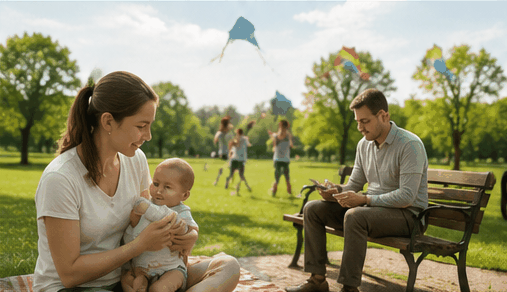
Illustration
Practice Tip
Try to notice the difference between actions that happen regularly (Simple Present) and actions happening now (Present Continuous). Use the vocabulary words to make your own sentences.