Unit 3: Describing People and Things

In this unit, you will learn easy adjectives to describe your friends, everyday objects, and favorite places. You will practice talking about what things look like in simple English.
Trong bài học này, bạn sẽ học các tính từ đơn giản để miêu tả bạn bè, đồ vật quen thuộc và những địa điểm yêu thích. Bạn sẽ được thực hành cách nói về ngoại hình và đặc điểm của mọi thứ bằng tiếng Anh dễ hiểu.
Target Vocabulary
We use adjectives to describe people, objects, and places. Here are some common words:
- big – large in size
- small – not big
- tall – high, long height
- short – not tall
- old – has lived many years
- young – not old
- good – positive, nice
- bad – negative, not good
- beautiful – very nice to look at
- new – not old
- hot – high temperature
- cold – low temperature
- happy – feeling good
- sad – feeling bad
Grammar: There is / There are
We use there is for one thing and there are for more than one.
- There is a tall man in the room.
- There are two small dogs in the park.
Adjectives before nouns
In English, adjectives usually come before the noun they describe.
- a big house
- a happy child
- an old car
Comparatives (basic)
We use comparatives to compare two things:
- My bag is bigger than your bag.
- This coffee is hotter than that tea.
- She is taller than her brother.
Worked Examples
Example 1: Describe the room:
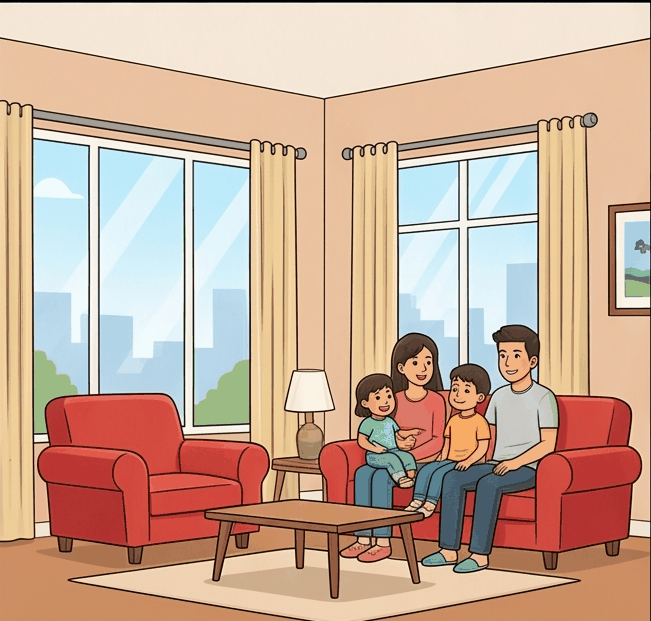
Answer: There is a big window. There is a red sofa. There are two happy people.
Example 2: Compare two objects:
Sentence: My pencil is short. Your pencil is long.
Answer: My pencil is shorter than your pencil.
Example 3: Describe a person:
Sentence: This man is old. He is also tall and happy.
Answer: He is an old, tall, and happy man.
🔑 Đáp án & Giải thích
Ví dụ 1: Sử dụng "there is" cho vật thể số ít và "there are" cho số nhiều. Ví dụ 2: So sánh dùng "-er" cho tính từ ngắn. Ví dụ 3: Tính từ đứng trước danh từ và nối bằng dấu phẩy khi có nhiều tính từ.