180 Days of High-Frequency Words (A1)
Unit 15
Unit Goal
In this unit, you will learn five useful high-frequency words:
- miss
- late
- second
- without
- stop
You can use these words to talk about time, actions, and everyday situations.
Vocabulary
1. miss
miss = to not catch, not see, or not get something.
Example: I missed the bus.
Example: She missed the game.
2. late
late = after the correct or expected time.
Example: He is late for school.
Example: The train is late.
3. second
second can mean the number 2 in order.
Example: She is the second person in line.
Example: This is my second book.
4. without
without = not having something.
Example: He went out without a jacket.
Example: I drink tea without sugar.
5. stop
stop = to end an action or movement.
Example: Stop talking, please.
Example: The car stopped at the light.
Picture and Vocabulary Context
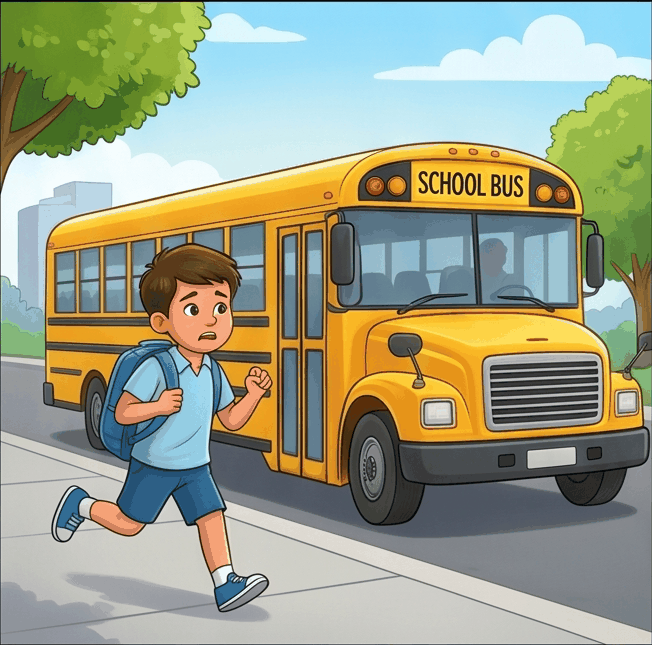
The student is late.
He may miss the bus.
The bus does not stop.
He runs without waiting.
Useful Language Patterns
Pattern 1: Be late for + place/event
Subject + be + late for + noun
Examples:
- I am late for class.
- She is late for work.
- We are late for the meeting.
Pattern 2: Miss + noun
Subject + miss(ed) + noun
Examples:
- I missed the bus.
- They missed the train.
- She missed the movie.
Pattern 3: Without + noun
Subject + verb + without + noun
Examples:
- He left without his phone.
- I eat rice without sauce.
- She went out without a coat.
Worked Examples
Example 1
Situation: Anna arrives at school at 8:15. School starts at 8:00.
Question: Is Anna late?
Answer: Yes. Anna is late for school.
Example 2
Situation: Tom gets to the bus stop after the bus leaves.
Question: What happened?
Answer: Tom missed the bus.
Example 3
Situation: Lucy drinks coffee. She does not put sugar in it.
Question: How can we say it?
Answer: Lucy drinks coffee without sugar.
Quick Review
- miss = not catch or not get something
- late = after the correct time
- second = number 2 in order
- without = not having something
- stop = end an action or movement
🔑 Đáp án & Giải thích
miss = bỏ lỡ, không bắt kịp hoặc không nhận được điều gì đó.
late = trễ, muộn hơn thời gian dự kiến.
second = thứ hai hoặc vị trí số 2.
without = không có, thiếu thứ gì đó.
stop = dừng lại, kết thúc hành động.
Mẫu câu quan trọng:
- be late for + danh từ → bị trễ cho một nơi hoặc sự kiện.
- miss + danh từ → bỏ lỡ một phương tiện, sự kiện hoặc hoạt động.
- without + danh từ → làm việc gì đó mà không có thứ gì.